Raw sewage flowing from Mexico into the United States through the Tijuana River has been a crisis affecting San Diego for decades. The untreated waters have shut down beaches, killed off wildlife, diminished air quality and have caused business closures and a loss in property value. As local leaders fight to get San Diego’s plight recognized at the federal level, VETCOMM CEO Kate Monroe is working to become a voice for America’s service members, who are training in the sewage and facing the consequences of it.
For Earth Day, on Tuesday, April 22, EPA Administrator Lee Zeldin was in San Diego to address the crisis. He toured wastewater facilities, met with American and Mexican officials, held a news conference and took site tours of the affected areas.
“This visit was an imperative next step to finally bring this decades-long issue to an end,” said Zeldin in an EPA press release on the issue. “The plan needs to be all-encompassing to end this crisis, it must all be finished as rapidly as possible and it must be completed in a way that also plans for the future, with Tijuana’s population continuing to increase. The conversation I had with Mexican authorities was promising and I hope this is the start of a new collaborative relationship of transparency and honesty and one laser-focused on cleaning up the river and keeping it clean for decades to come.”
Monroe’s company, VETCOMM, assists veterans in filing a disability claim with the Department of Veterans Affairs. As CEO, she frequently hears first-hand how the sewage crisis is affecting service members–and she’s sounding the alarm.
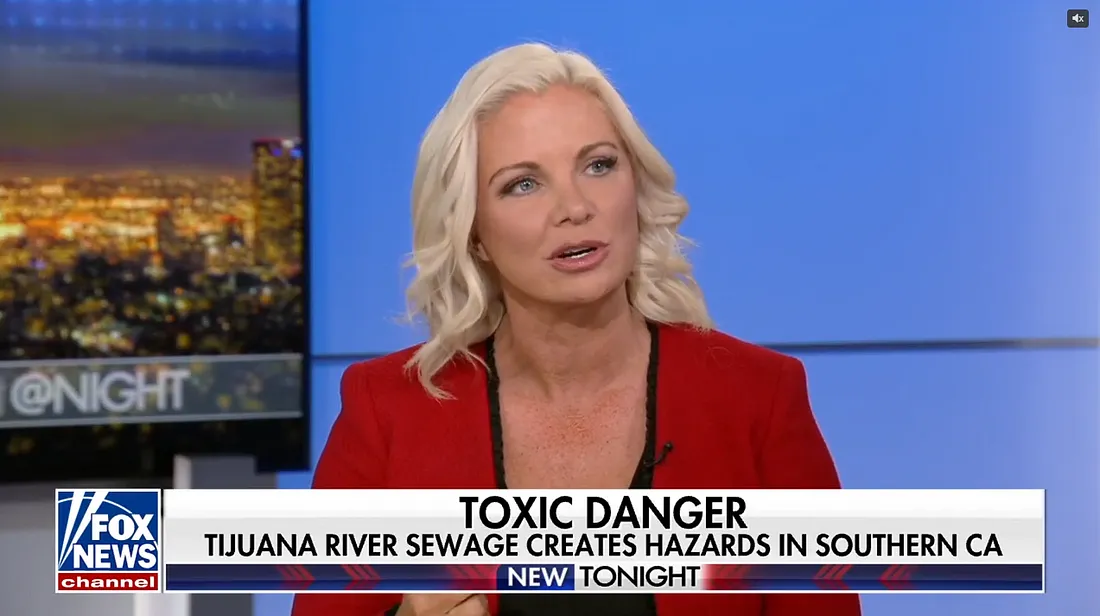
Her efforts to shed light on this issue began in 2024 when she took to social media and Fox News. Now, as Zeldin’s visit puts the public’s eye on the crisis, she’s heading back to Fox News and sitting down for interviews to be a voice for America’s heroes.
The Overlooked Danger Facing Our Service Members
For decades, the Tijuana River has been a conduit for untreated sewage flowing from Mexico into Southern California, leading to environmental degradation, beach closures, and significant health risks. This ongoing crisis has now taken a toll on U.S. service members, particularly Navy SEAL trainees, who are exposed to contaminated waters during their rigorous training exercises.
Kate Monroe, CEO of VETCOMM, is leading the charge in addressing this pressing issue. Through her organization, she assists veterans in filing disability claims with the Department of Veterans Affairs. Many of these veterans report ailments potentially linked to exposure to polluted waters. Monroe’s advocacy aims to bring national attention to the health hazards military personnel face due to the sewage crisis.
On Earth Day, April 22, EPA Administrator Lee Zeldin visited San Diego to assess the situation firsthand. He emphasized the urgency of implementing comprehensive solutions to mitigate sewage flow’s environmental and health impacts. While Monroe welcomed the EPA’s involvement, she expressed disappointment over missed opportunities for direct dialogue with federal officials to discuss the veterans’ plight.
The Tijuana sewage crisis is both an environmental concern and a public health emergency affecting civilians and service members. Monroe’s relentless efforts underscore the need for immediate action and accountability to protect those who serve the nation.
Q&A with Kate Monroe
How is the Tijuana Sewage Crisis affecting service members?
KM: At VETCOMM, we make claims for many SEALs. We, somehow, got into the SEAL universe here. We started to wonder why so many of them had all of these claims for stomach issues, cancers and skin things. We did some investigative work, talking to these doctors down in San Diego, and it appears that the Tijuana sewage problem causes IBS, GERD, these cancers, skin conditions and a litany of other things. It causes pneumonia and diarrhea. A lot of people who don’t make it through SEAL training, it isn’t because they can’t hack it. It’s because they’re nearly drowning in stagnant water that has human feces, drugs and all different forms of drugs and diseases. They end up getting sick and getting dropped. So, it’s going to cost, in my opinion, billions of dollars to, in some way, give reparations to veterans for everything that they’ve gone through in that water. It’s much like Camp Lejeune. It’s definitely on our radar, something we’re monitoring.
I was glad to see the EPA here but disappointed in him [Zeldin] that he didn’t take the time to meet with me, even though he said he would.
Why do you think this issue hasn’t received the attention it deserves?
KM: I think people don’t understand the gravity of the situation. It’s now a FEMA-level crisis that sewage is in our beaches, all the way up to the midline of San Diego County, all the way to Encinitas. So, if you’re coming to visit us and enjoying our tourism here and getting in our beaches over the summer, just know you’re swimming in shit water. And we’d like to cover that up, just like we cover up our homelessness. San Diego relies on tourism, so I think that’s one piece.
Another piece of it is it’s much like when you go into a hoarder house and it’s so messy that it’s unclear where to start. It’s such a big problem. First, we’ve got to shut down the thousands of gallons a day that are coming into our waterway. Then, we’ve got to clean up all the water we already have. We’ve got to build infrastructure for Mexico because they’re not going to do it without force or without resources. So, it’s just such a big problem to tackle. I think people just haven’t had the stomach to tackle it. They don’t want to tackle homelessness, drugs and lawlessness because where do you start? They just don’t have the appetite for it.
Are you satisfied with Zeldin’s visit to San Diego?
KM: I know many of the lawmakers he met with here in San Diego and many of these people have been in power a long time and they didn’t do a damn thing. So, it’s kind of a wonder why you choose to meet the same people over and over again who don’t do anything, like most of the people in Washington.
I would like to see them hold Mexico accountable but I think without the Trump Administration leaning all the way down from the federal level, pushing Mexico, it’s not going to happen. Because Trump tried to tackle this the first time. He actually allocated resources and sent things to Mexico for them to build this and they did nothing with it. So, as of right now, it all sounds really good but I’m going to be watching to see if they actually execute on these promises because it’s easier said than done.
What do you think needs to be done to rectify this situation for service members who have faced the consequences of training in this water?
KM: They get less sick from the ocean water than they get from this stagnant water that they play drowning games in. It smells. Even when you’re driving up and the windows are closed, you can smell the sewage. Can you imagine willingly getting into that water until you’re drowned and filling your whole lungs with it and your whole stomach, and basically chugging this water? They need to stop that practice immediately. There’s no reason why you can’t practice drowning, if that’s a necessary part of training, inside a pool or make some other replication. Go replicate this swamp water with clean water. There’s absolutely no reason to put people in that. They used to train on the East Coast. I know this won’t be popular among SEALs, but they were a lot safer in that training ground than they were here in San Diego. So, maybe they need to move some of the training back to the East Coast. It’s just not safe for their health. I know they all love being in San Diego, and Coronado is beautiful, but when you turn 35, 40, 50 and you are literally choking to death every time you eat, you’re not going to think it’s so cool that you nearly drown in that small corner.
Do you have hope that this situation will be resolved?
KM: I’m going to give it 50/50 because I think that this administration wants to and I think they’ll try to allocate resources for it, but they’re trying to tackle the border and the sewage crisis and wars breaking out around the world, handling this tariff situation. Sometimes, it’s the difference between In-N-Out Burger and Jack in the Box. I don’t go eat at Jack in the Box because their burgers taste like egg rolls. They make too many things. They marginalize their success by trying to do too much. Whereas In-N-Our Burger makes fries, shakes and burgers. That’s all they make and people love them. So, I hope that they have the bandwidth to focus on all of these things.
Earlier, you said Lee Zeldin didn’t meet with you during his San Diego visit. Is there more you’d like to say on this?
KM: When they’re ignoring voices like mine, they’re doing themselves a disservice because I don’t know where you’d find a person to speak on behalf of a larger community than me. And for you to come all the way to San Diego, telling me that you’re going to meet me and then snub me because some lawmaker told you they didn’t want me there because I was going to run for Congress, which I’m not, is an oversight and wasn’t met with positive feelings by our organization. So, you may want to reach out to me and rectify the situation.
As the Tijuana sewage crisis continues to threaten San Diego’s environment, public health and economy, it’s clear that major changes need to be made to protect not only San Diegans, but also the service members who protect the country. While recent attention from Zeldin offers a glimmer of hope, meaningful change will require sustained collaboration, accountability and action from both sides of the border. Until then, advocates like Monroe and organizations like VETCOMM will keep pushing for justice, ensuring that those who serve our country aren’t left to bear the burden of a crisis decades in the making. The time to act is now. San Diego’s future, and the wellbeing of its heroes, depend on it.